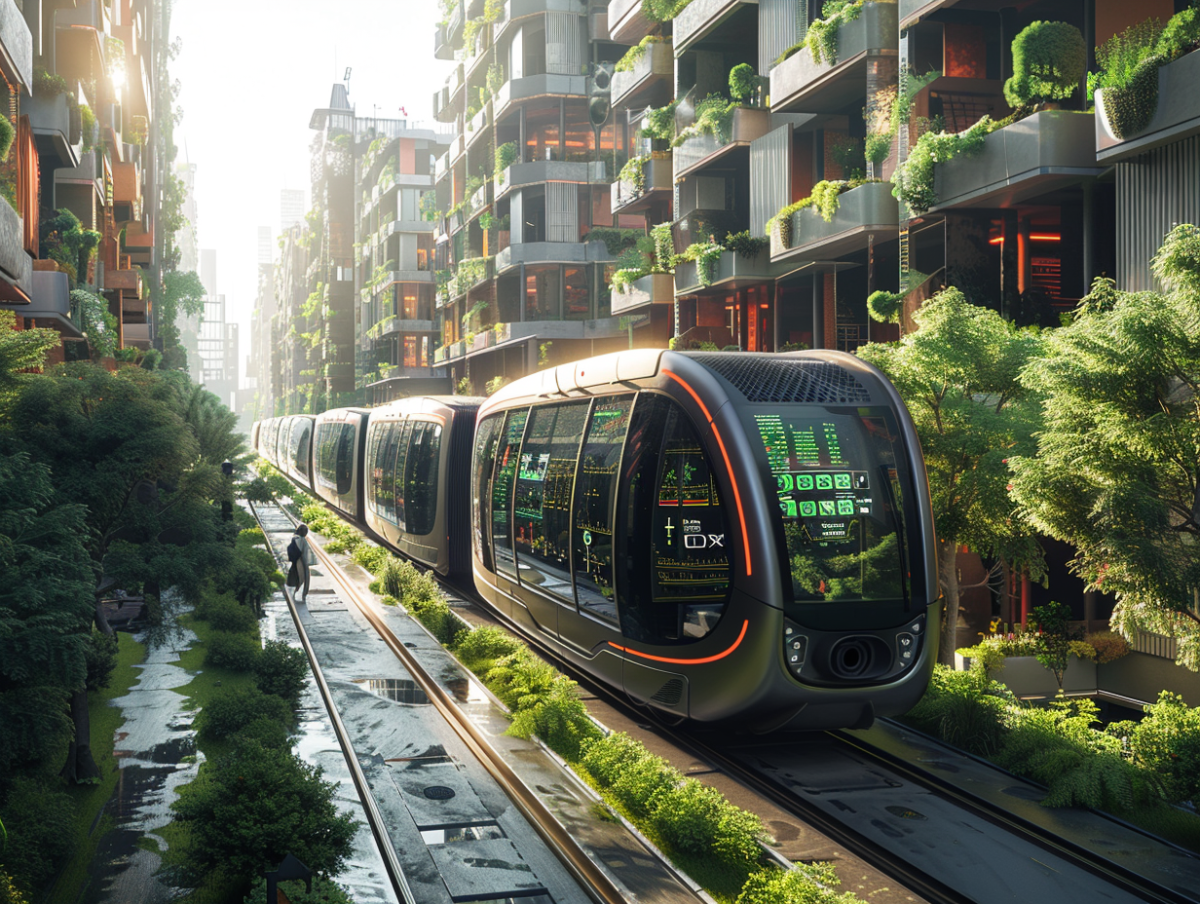
At the dawn of a revolution in the field of transportation, technological innovations are emerging as the architects of a new era for public transport. These advancements promise to enhance user experience while addressing current ecological imperatives. From electric propulsion to artificial intelligence, through ubiquitous connectivity and autonomous vehicles, each progress paves the way for more efficient, accessible, and sustainable transport systems. These technologies are not only reshaping existing infrastructures; they sketch a future where urban mobility rhymes with innovation and environmental respect.
Emerging Technologies Revolutionizing Public Transport
Artificial Intelligence and Internet of Things are now merging to offer advanced mobility solutions, radically transforming the face of public transport. The promise of autonomous vehicles, tested by giants such as Tesla and Uber, is already embodied in initiatives like the Keolis self-service, foreshadowing a significant reduction in traffic congestion. These emerging technologies are drawing a new map of transport modes, where fluidity and responsiveness take precedence. Systems like SURTRAC optimize urban traffic management, while smart virtual rails, launched in China, challenge the very idea of fixed infrastructure.
The public transport revolution is also illustrated through advancements in technological innovation in rail and air transport. The Hyperloop, a concept initiated by Elon Musk and developed by various entities, envisions propelling capsules through low-pressure tubes, promising to connect metropolises in minutes rather than hours. Meanwhile, systems like Google Flights integrate Machine Learning to anticipate flight delays, while air transport explores facial recognition and autonomous planes for smoother and safer passenger flow management.
At the heart of these transformations, the electrification of vehicles offers a horizon of sustainable mobility. Driverless buses are already operating in Europe, heralding an era of more environmentally friendly public transport. Biometric transport tickets are emerging as an innovative solution to secure access while simplifying transactions. As for maritime and space mobility, it is also reinventing itself with projects such as remote-controlled cargo ships and bold initiatives from Virgin Galactic, paving the way for a future where the very notion of distance is redefined.
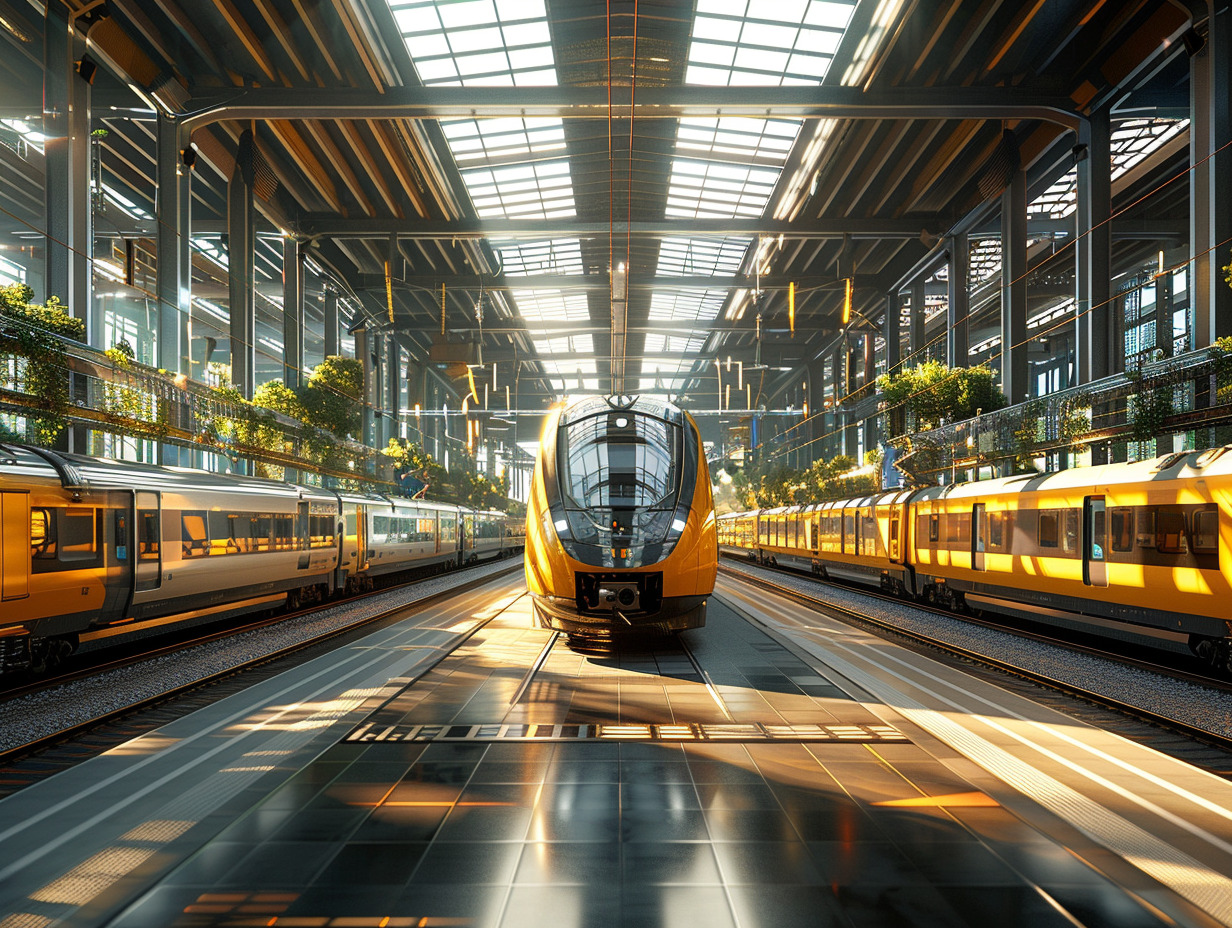
The Environmental and Social Impact of Innovations in Public Transport
Autonomous vehicles and automated delivery trucks, emerging on the roads from San Francisco to Shenzhen, embody the dual promise of a more sustainable transport and a substantial reduction in greenhouse gas emissions. Connected license plates, for example, tested in Dubai, contribute to safer and more ecological traffic management, signaling accidents instantaneously. Connected highways, developed in China and Australia, even envision recharging electric vehicles while in motion, sketching a break from dependence on fossil fuels.
Beyond the environmental aspect, the social fallout of technological innovations in public transport proves to be considerable. Helsinki and Amsterdam are experimenting with driverless buses, foreshadowing a future of urban transport that is more inclusive and accessible. These mobility services, by their automated nature, could promote equal access to transport means for people with reduced mobility or those living far from urban centers. Biometric transport tickets are emerging as a solution capable of securing travel while streamlining passage through control barriers.
In the maritime sector, remotely controlled cargo ships, designed by Rolls-Royce, are preparing to navigate the seas as early as 2020. These innovations, reducing carbon emissions and maritime pollution, combine with devices like Sublue’s WhiteShark MIX, an electric underwater scooter, to offer sustainable transport options even in aquatic environments. Space transport, with initiatives like those from Virgin Galactic, raises new questions about the environmental impact of travel beyond our atmosphere, opening a necessary debate on the limits of our quest for innovation in the face of ecological imperatives.