
A Tmax that runs on ethanol? The idea is bouncing around garages and forums, but mechanics have their limits, even when the technical specifications show superficial compatibility. On paper, the latest models tolerate SP95-E10, but the reality in workshops tells a different story: seals that wear out, performance that falters, and sometimes, breakdowns that were just waiting for the arrival of ethanol.
With a wide choice of fuels, SP95, SP98, SP95-E10, E85, it’s easy to lose track. Each fuel promises a unique compromise between budget, engine preservation, and driving sensations. Between official recommendations and field feedback, it’s hard to navigate for those who want to take care of the mechanics without sacrificing their wallet.
Understanding the differences between SP95, SP98, SP95 E10, and E85 for Yamaha Tmax scooters
At French gas stations, each pump displays its own promises. Owning a Yamaha Tmax requires paying attention to what you put in the tank: beyond the price, the longevity of the engine is at stake with every fill-up.
SP95 offers a good compromise with its octane rating of 95 and low ethanol content, making it a safe choice for most Tmax models, both old and new. SP98, more expensive, boasts slightly more stable combustion, but for modern engines designed for SP95, the gain remains marginal. SP95-E10, containing 10% ethanol, changes the game: some seals, hoses, or components are not fond of this additional alcohol, especially on older models. Each model has its fuel, simply put.
E85 is a whole different world. With over 65% ethanol, a pump price that’s hard to beat, but an engine that only tolerates it with concrete modifications: dedicated electronic control unit, fuel injection adaptation… Without serious adjustments, the mechanics suffer, sometimes much faster than one might think. No Tmax is delivered, to date, ready to consume E85 in France.
Before experimenting, it’s better to consult specialized resources to assess the compatibility of the Tmax with ethanol. A precaution to avoid a mishap or a mistake that could be costly in the long run.
Is SP95 E10 compatible with your Tmax? What to know before refueling
SP95 E10 is taking up more space at the pumps, yet its suitability for the Yamaha Tmax is still debated. Its ethanol content remains high, up to 10%, and it really depends on the year of production of the scooter.
Models released since 2012, like the 530 and 560, are designed to accept this fuel without issue: their seals, hoses, and fuel components are chosen with this in mind and can handle this level of ethanol without loss of reliability. However, for a Tmax prior to 2012, the risk exists: accelerated wear, leaks, or various complications in the long term.
A simple reflex: check the technical documentation of your Yamaha Tmax. A label, sometimes hidden under the fuel cap or on the tank, clearly mentions the recommended fuels. If the indication is not explicit, it’s better to stick with SP95 or, if not available, SP98 for the older models of the scooter.
Urban use, especially consisting of short trips and repeated starts, already puts enough strain on the fuel system. Choosing your fuel based on the age of the scooter also helps maintain reliability over time.
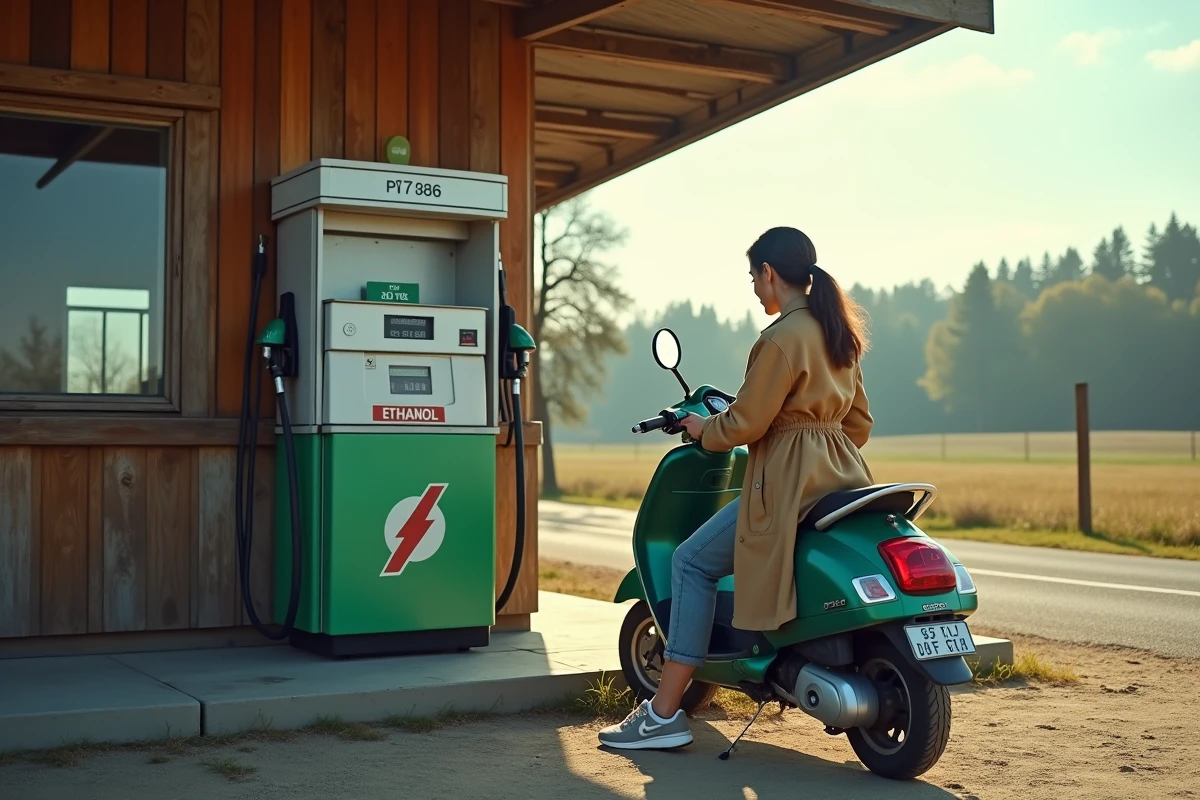
Advantages, risks, and precautions: is using E85 on a scooter really a good idea?
E85, also known as superethanol, appeals with a price significantly lower than traditional gasoline and a more “green” composition due to its plant origin. Many wonder about the relevance of this choice, especially for those who cover many kilometers each year.
But switching to E85 on a Tmax is not trivial. Without modification, no engine is ready to handle this alcohol concentration: wear of injectors, seals that can’t withstand the distance, corrosion… Installing an approved E85 kit is essential if you want to go further, but this has an immediate impact on the Yamaha warranty and can seriously affect future resale or coverage in case of a claim.
Before considering this fuel, it’s necessary to think about a few key points:
- Mechanical risks: accelerated wear of certain components, difficult starts in cold weather, gradual corrosion of the fuel system.
- Performance drop: loss of power, increased consumption, engines sometimes temperamental on a daily basis.
- Legal framework: a modification that changes the game regarding insurance or when reselling the scooter.
Choosing superethanol means opting for an option that requires method and foresight. Between model compatibility, installation of a kit, and maintenance tracking, every detail matters to avoid troubles. The immediate savings at the pump can hide unforeseen costs, both mechanical and administrative.
Ultimately, each fuel carves its path for your Tmax. Being tempted by savings or preserving the mechanics, everything is at stake without compromise once the nozzle is engaged. When in doubt, caution has never caused harm on the road.