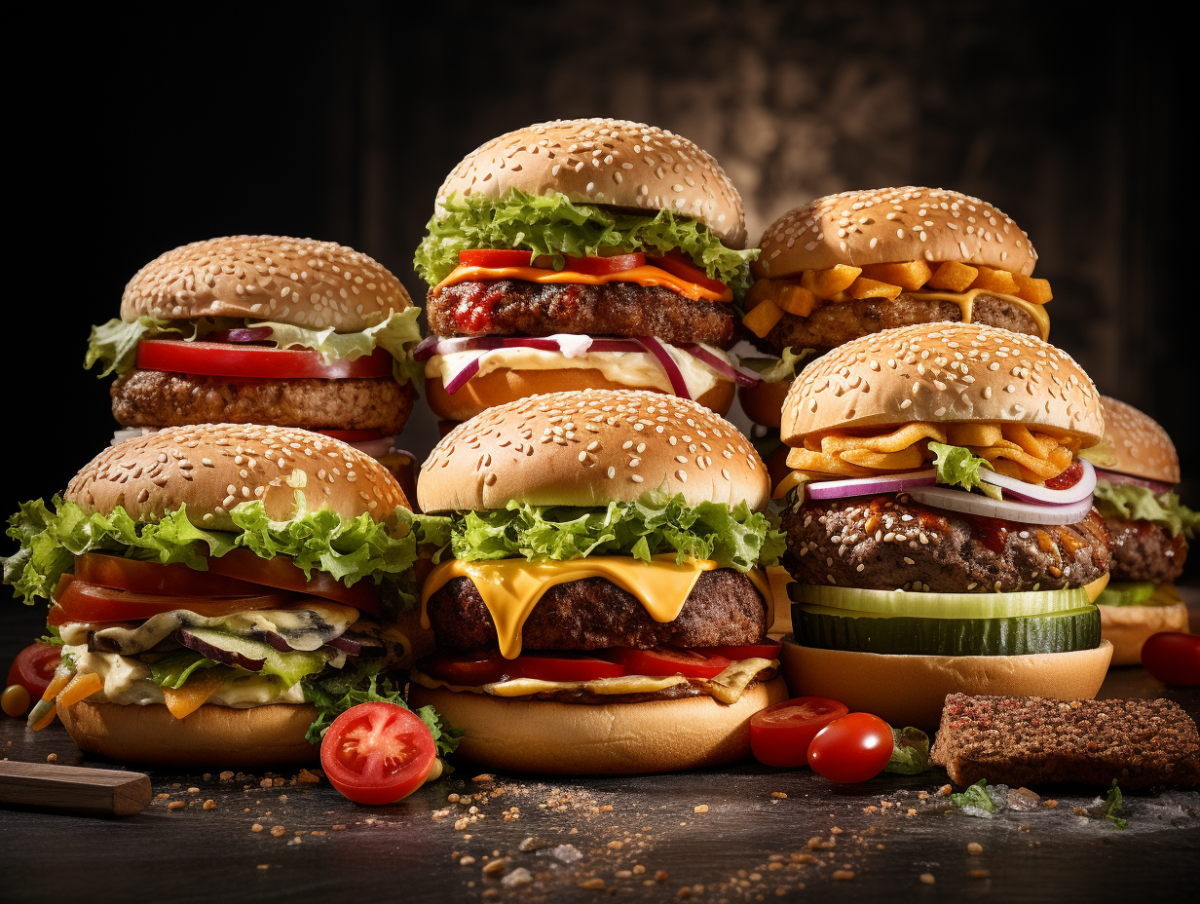
In today’s fast-paced world, fast food has firmly established itself in the urban food landscape. With their promise of quick and tasty meals, burger chains are experiencing global success. This popularity is often weighed against public health concerns. The nutritional composition of these iconic sandwiches sparks lively debates among consumers and health experts. A detailed examination of the ingredients, calorie content, fat, salt, and additives in the best-selling burgers reveals insights into their impact on modern diets.
Nutritional Comparison of Burgers from Major Fast-Food Chains
In the realm of fast-food chains, the burger battle is also fought on the nutrition front. Let’s take the calories of a Big Mac as a point of comparison, one of McDonald’s flagship products, often used as a benchmark in this type of analysis. In light of the Nutri-Score, a nutritional labeling system implemented in France in 2017, products such as the McWrap™ Chicken, Red Cabbage, and Onion Pickles and the Signature Charolais Red Cabbage and Onion Pickles from McDonald’s receive an ‘A’ score, indicating a more favorable composition in terms of nutrients to promote.
The Nutri-Score classification of burgers provides an overview of healthier choices available at these establishments. Burgers like the McFish or the P’tit Wrap Ranch, rated ‘B’, while less favorable than ‘A’ products, remain a relatively moderate option in terms of calorie intake and nutrients to limit. The diversification of menus, with the integration of salads and lower-calorie products, reflects a growing awareness among chains regarding public health issues.
It is essential to consider all nutrients when evaluating the impact of fast food on our diets. Beyond calories, sodium content, saturated fats, and protein quality are key criteria for assessing the nutritional value of a burger. Products like the Big Mac or the Whopper from Burger King are often criticized for their high density of these potentially harmful nutritional elements if consumed excessively.
The transparency of nutritional information allows consumers to make informed choices. Notable advancements, particularly at McDonald’s with the contribution of Clémence de Raulin, Director of Innovation, aim to incorporate raw vegetables and manage the nutritional balance of the offered menus. This underscores the industry’s efforts to adapt to consumer demands and health authority recommendations while maintaining taste and customer satisfaction.
Health Impact and Tips for Responsible Consumption
Fast food and its flagship products such as the Big Mac from McDonald’s or the Whopper from Burger King are often associated with an unbalanced diet. Nutritional studies reveal that these hamburgers can contain a calorie amount comparable to half of an adult’s daily energy needs. Consider that for a man with moderate activity, consuming a Big Mac meal with fries and a drink can represent around 2100 calories, which is the recommended caloric intake for an entire day.
Aware of the issues, the McDonald’s chain, driven by Clémence de Raulin, Director of Innovation, strives to balance its menus. The incorporation of raw vegetables and the management of nutritional balance are steps forward to address public health concerns. This initiative illustrates a willingness among fast-food chains to adapt to the necessities of healthier eating.
For responsible consumption of fast foods, follow some practical tips: prioritize products with a favorable Nutri-Score, limit portions, and complement your meal with lighter options such as salads or fruits. Pay attention to the nutritional information provided by the chains and adjust your consumption to your actual energy needs, avoiding excesses that could negatively impact your long-term health.