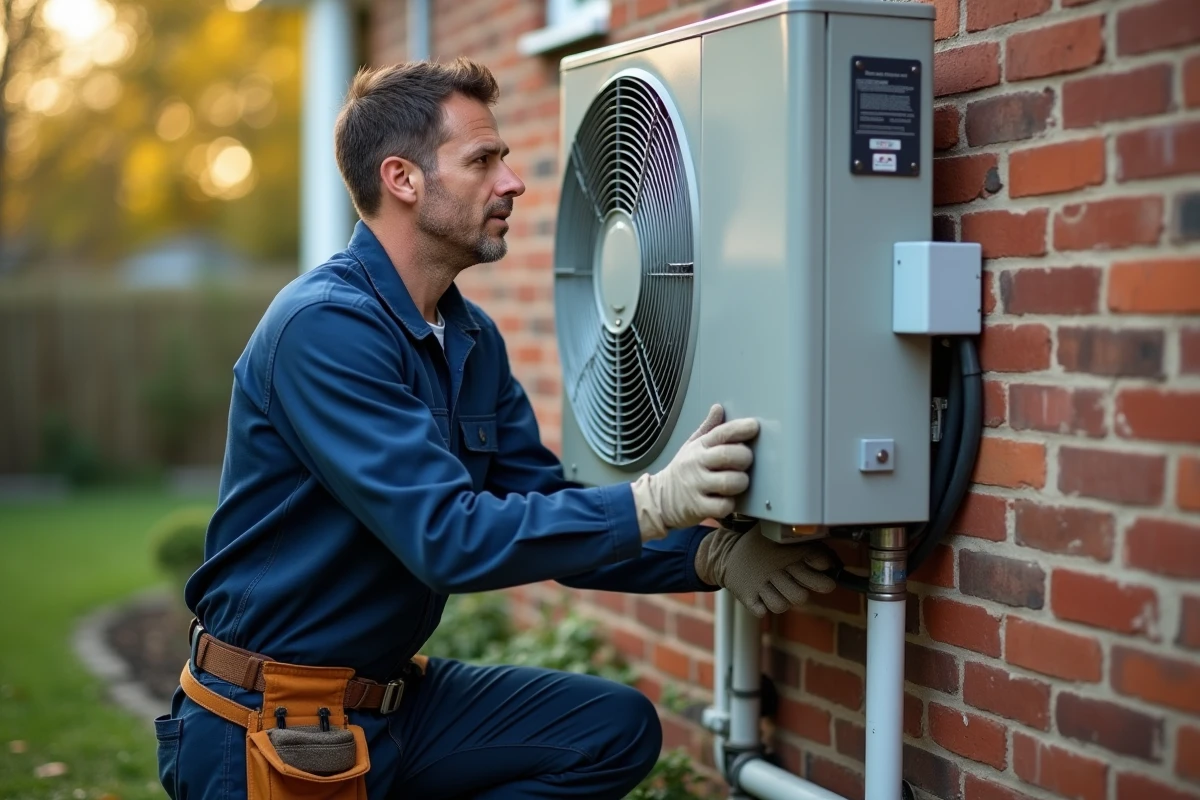
The air-water heat pump accounts for a large part of energy renovation installations. However, the performance gaps between two identical installations on paper can reach significant proportions. What distinguishes a high-performing air-water heat pump from a disappointing one rarely lies in the equipment itself, but rather in a series of measurable technical parameters before, during, and after installation.
Water supply temperature and COP: the link that quotes don’t show
The coefficient of performance (COP) of an air-water heat pump varies directly with the water temperature requested by the heating circuit. The lower this temperature, the more the compressor operates within its optimal range.
Recent field reports confirm that heat pumps supplying low-temperature emitters are significantly more efficient. Manufacturers are now encouraging installers to aim for a water temperature of 45 °C or lower under nominal conditions, to avoid excessive consumption and early failures.
| Type of emitter | Typical water temperature | Impact on COP |
|---|---|---|
| Underfloor heating | 30-35 °C | Optimal COP |
| Oversized radiators | 40-45 °C | Favorable COP |
| Low-temperature fan convectors | 35-40 °C | Favorable COP |
| Old cast iron radiators not replaced | 55-65 °C | Degraded COP, accelerated wear |
The gap between an installation set at 35 °C and another constrained to 60 °C translates into a very concrete difference in electricity consumption over a heating season. Before signing a quote, check the water supply temperature planned by the installer. If it exceeds 50 °C with your current emitters, consider partially replacing the radiators or adding underfloor heating.
To delve deeper into the tips for installing an air-water heat pump, the question of water temperature remains the most underestimated technical lever in residential projects.

Power sizing: why oversizing degrades the air-water heat pump
A common mistake is to install a heat pump that is more powerful than necessary, just to be safe. The reasoning seems logical, but its technical consequences are measurable.
An oversized heat pump reaches the set temperature too quickly, stops, and then restarts. This phenomenon of short cycling causes three simultaneous problems:
- Premature wear of the compressor, stressed by repeated starts rather than by continuous operation at partial load
- A real COP lower than the nominal COP, because the compressor rarely operates within its optimal efficiency range
- Irregular thermal comfort, with noticeable temperature fluctuations in living areas
Accurate sizing relies on a thermal study of the building, not just on the living area. Actual heat losses depend on wall insulation, glazing quality, exposure, and local climate. Starting in 2024, MaPrimeRénov’ and CEE grants increasingly require the prior completion of an energy audit to validate the relevance of an air-water heat pump, especially in older homes.
Location of the outdoor unit: acoustic and airflow constraints
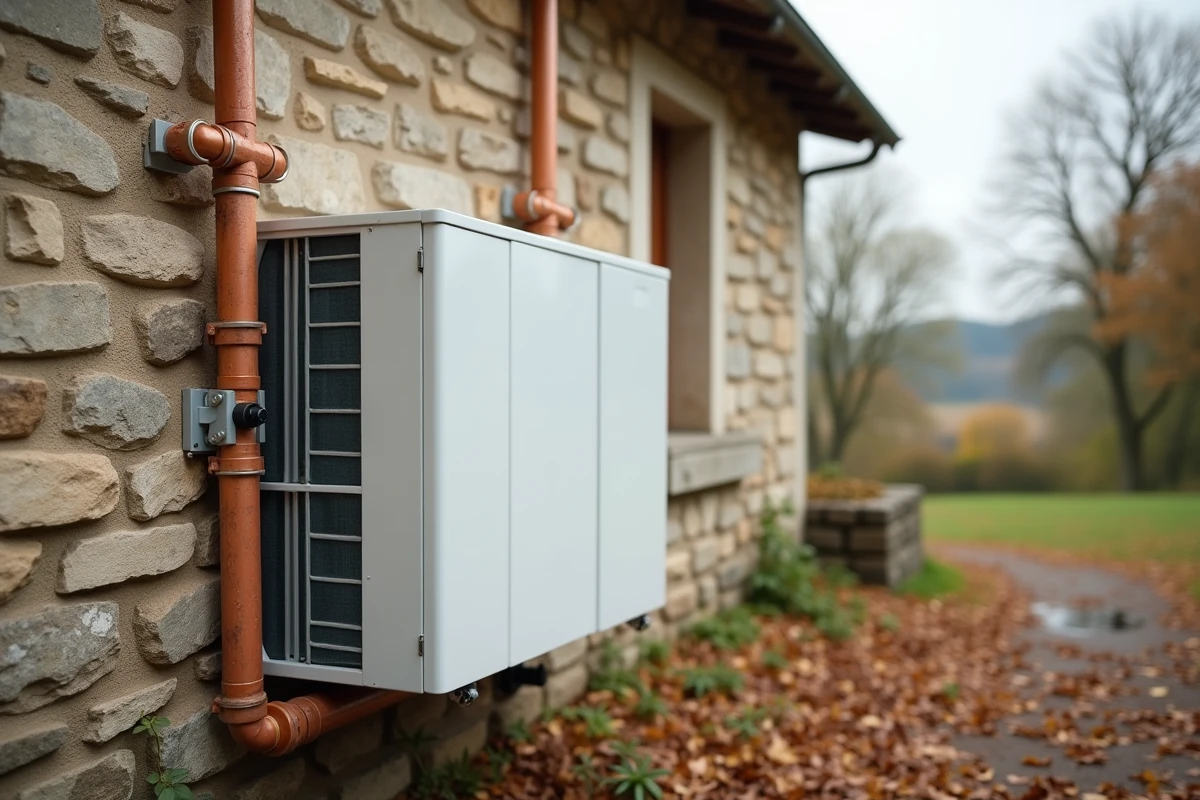
The outdoor unit of an air-water heat pump draws in a considerable volume of air to extract calories. Its positioning affects both performance and acceptability by neighbors.
Distance and airflow
Placing the unit in a closed corner, under a low awning, or between two close walls creates a recirculation phenomenon. The already cooled air is re-aspirated by the machine, which reduces efficiency. A free clearance of at least 50 cm on the sides and above remains the standard recommendation from manufacturers.
Noise nuisances and regulations
The noise from the outdoor unit is the primary source of disputes between neighbors after installation. Minimum distances from property boundaries vary by municipality. Before installation, check the Local Urban Plan and, if necessary, submit a prior declaration of works.
Some installations require an acoustic screen or reinforced vibration dampers under the unit. The cost of these accessories remains marginal compared to the cost of a neighborhood conflict.
Adjustment after installation: the phase that many installers overlook
The technical commissioning does not just involve checking that the heat pump starts. Operational feedback shows that fine-tuning after installation (commissioning) makes a measurable difference in annual consumption.
This adjustment includes several parameters:
- The heating curve, which adapts the produced water temperature to the outside temperature. A poorly calibrated curve leads to overproduction of heat in mild weather
- The pressure of the hydraulic circuit and the flow in each heating loop, which must be balanced to avoid cold spots
- The defrosting parameters of the outdoor unit, to be adjusted according to the local climate to limit unnecessary consumption
A properly adjusted heat pump after installation consumes significantly less than a pump delivered in factory configuration. Demand a tuning visit from your installer after two to four weeks of operation, once the building has reached its stable thermal regime.
The mandatory maintenance, to be carried out by a certified professional, also allows for checking that these adjustments have not drifted over the seasons. A check of the refrigerant fluid, pressure, and actual performance ensures the longevity of the heating system.
The parameter that determines the success of an air-water heat pump installation does not appear on any product sheet: it is the consistency between the installed power, the water supply temperature, and the actual adjustment after startup. These three measurable and verifiable data points separate a heat pump that delivers on its energy savings promises from one that disappoints from the first winter.