
A paint chip left exposed on a car parked outdoors without a garage is more than a cosmetic issue: it leaves the metal vulnerable to oxidation. The depth of the damage determines how urgent it is and which method to use. If only the clear coat is affected, corrosion is unlikely. If the primer or bare metal is exposed, every day of exposure accelerates deterioration of the underlying surface.
Assessing the paint chip: clear coat, color coat, primer or bare metal
Before taking any action, identify which layer has been affected. A modern car body has four layers: e-coat, primer, color coat and clear coat. A chip can stop at any one of them.
A chip limited to the clear coat appears as a dull or slightly whitish area, with no change in color. The color coat is still visible underneath. In this case, protecting the underlying surface is not urgent, but the damaged clear coat will leave the color coat exposed to UV rays, causing it to fade within a few months.
If the color coat has chipped away, a different color—often gray, indicating the primer—will show through. If bare metal is visible, a shiny or already orange spot is a sign that corrosion has begun. At this point, prompt action is the only sensible option, whether you have a garage or not.
We recommend using a magnifying glass and a raking light to distinguish the layers clearly. Light gray primer can easily be mistaken for metal that has not yet oxidized under direct overhead lighting.
Temporary protection for an outdoor paint chip
The goal of temporary protection is not to repair the damage, but to keep water, air and contaminants away from the metal until you can touch it up in suitable conditions. Even if you’re tempted to use a touch-up pen right away, comprehensive car insurance does not cover damage caused by poor maintenance, and a rushed touch-up in windy conditions can make things worse.
A thin coat of clear spray lacquer applied to the cleaned area provides the best temporary barrier. It seals the surface against moisture without interfering with a future professional touch-up, as it can be sanded off easily.
If that’s not an option, a clear protective adhesive film (such as thin-gauge PPF) cut to the size of the chip can work for a few weeks. The area must be completely clean and dry before application; otherwise, moisture can get trapped under the film, accelerating corrosion instead of slowing it down.
- Clean the chip with isopropyl alcohol to remove any wax, grease or dust before applying anything.
- If surface rust has already appeared, remove it with a rust converter applied using a cotton swab, then let it dry completely before applying protection.
- Avoid using regular masking tape as long-term protection: heat can cause its adhesive to leave residue, and removing it may pull off even more paint.
- Never use wax or polish on a deep chip: these products do not seal the metal and leave a greasy layer that makes later touch-ups more difficult.
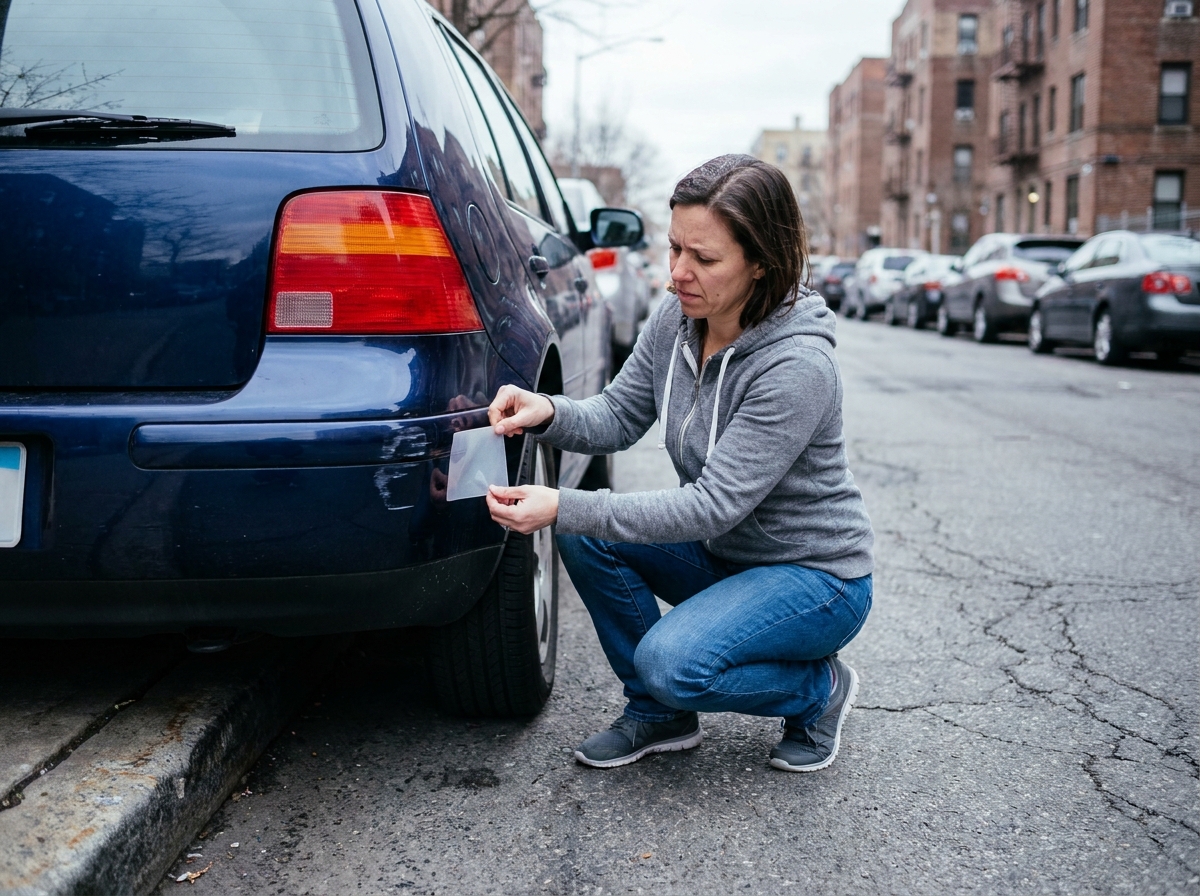
Touching up car paint without a garage: conditions and limitations
It is possible to touch up paint outdoors, but the conditions are more demanding than in a workshop. The product’s technical data sheet (for a touch-up pen, brush bottle or spray can) always specifies a temperature range and maximum humidity level. These limits are not recommendations: they are the conditions required for proper curing.
Wind presents a separate challenge from temperature. Even in dry, mild weather, a breeze can carry tiny particles that settle in fresh paint and leave visible inclusions once it dries. A simple screen made from sturdy cardboard and placed around the area can significantly reduce this risk.
Metallic and pearlescent finishes: a special case
On metallic paint, a touch-up pen almost never reproduces the original finish. The aluminum flakes in the base coat orient differently depending on the pressure, angle and thickness of the application. The result is often noticeable, even when you use the correct color code.
With these finishes, a DIY touch-up is meant to protect the underlying surface, not blend seamlessly for a perfect cosmetic result. Accepting this limitation helps avoid adding layer after layer in an attempt to match the color, which creates an unsightly raised area that is harder to correct later at a body shop.
Preparing the panel before application
Lightly sanding the edges of the chip with a very fine abrasive helps the touch-up adhere without creating a visible ridge. Degrease the area a second time just before application. On bare metal, apply a thin coat of primer before the color coat; otherwise, adhesion will be inadequate and the paint will start flaking again within a few weeks.
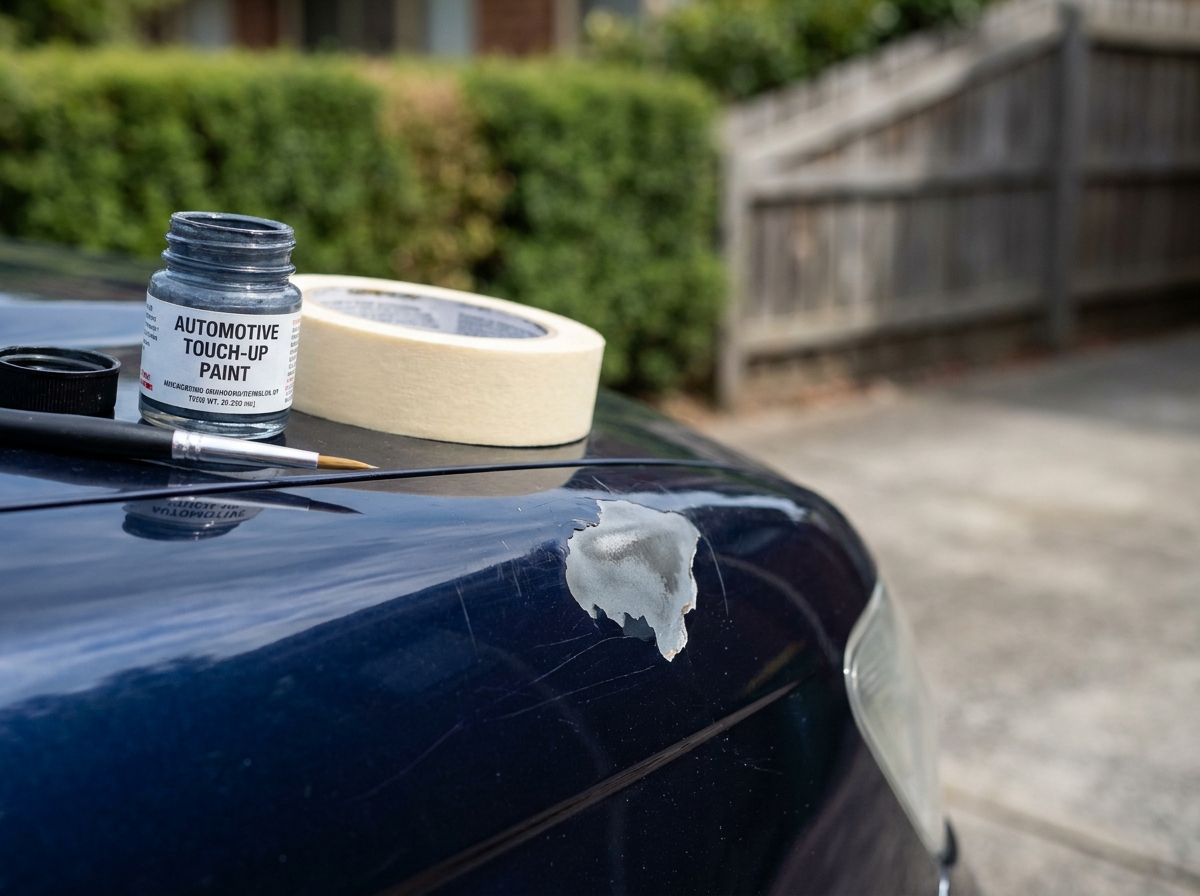
Preventing paint chips on a vehicle parked outdoors
A vehicle without a garage is constantly exposed to damaging elements: UV rays, acid rain, bird droppings, tree sap and sand. Paint does not chip for no reason. Chips appear in impact zones (the hood, bumpers and rocker panels) and on surfaces where the clear coat has weakened due to lack of maintenance.
- PPF protection film on the hood and bumper edges absorbs stone chips, the leading cause of paint damage on a road-going vehicle.
- A ceramic coating on the entire bodywork improves the clear coat’s chemical resistance and reduces the adhesion of organic contaminants.
- A breathable car cover used when the vehicle is parked for extended periods limits exposure to UV rays and bird droppings, but it must be placed over a clean body to prevent friction from causing micro-scratches.
None of these solutions replaces regular visual inspections. Treating a pinhead-sized chip with a touch-up pen takes just a few minutes and can prevent the need to repaint an entire panel a few months later. For a vehicle that is constantly exposed to the elements, how often you inspect it matters more than which protective product you choose.