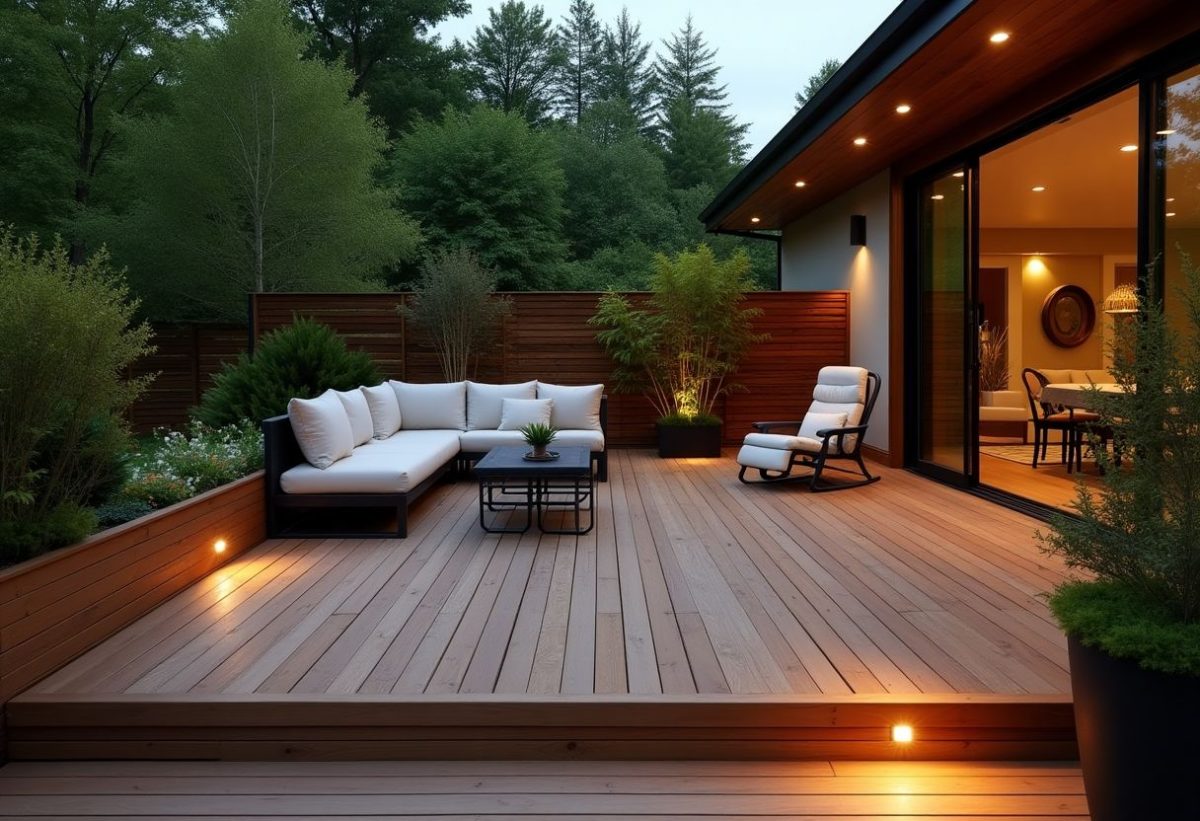
Creating a wooden terrace is much more than just an aesthetic improvement to your outdoor space. It is a project that brings warmth, elegance, and true added value to your home. Wood, with its natural texture and warm color, offers a unique sensory experience and creates a harmonious link between your house and nature. Engaging in the development of this space requires careful planning and thoughtful consideration of materials, layout, and maintenance.
Whether you are looking for an outdoor dining area, a relaxation space, or a place to entertain your friends, a well-designed wooden terrace can transform your garden into a true extension of your home.
Choosing the Ideal Wood for Your Terrace
The choice of wood is an essential step in ensuring the durability and aesthetics of your terrace. The species vary in terms of strength, color, and cost.
- Exotic woods: Ipe, teak, or cumaru are prized for their robustness and natural resistance to the elements.
- European woods: Larch and treated pine offer economical solutions while remaining durable thanks to appropriate treatments.
- Composite wood: An eco-friendly alternative, mixing wood fibers and resin, it requires little maintenance while mimicking the natural appearance of wood.
Designing the Layout of Your Terrace
The layout of the terrace plays a key role in its functionality and visual appeal. It is fundamental to maximize the available space while maintaining smooth circulation.
You can opt for a raised terrace if your land has slopes, creating a clear separation between different levels of the garden. For a more modern approach, consider integrating ground lighting that will highlight the contours of your space during the evenings. If space allows, creating distinct areas for dining and relaxation can be considered. This not only structures the space but also accommodates different types of activities simultaneously.
Complementary Materials and Decorations
The materials and accessories chosen to accompany your terrace can transform this space into a unique and personalized place.
- Add potted plants to bring freshness and color. They can also serve as a natural separation between different areas.
- Outdoor furniture should be comfortable and durable. Opt for materials like synthetic rattan or treated steel.
- Decorative accessories: Colorful cushions, lanterns, or outdoor rugs help create a warm and welcoming atmosphere.
Maintaining Your Terrace for Optimal Longevity
To preserve the appearance and solidity of your wooden terrace, regular maintenance is essential. Different methods can be employed depending on the type of wood used.
Start with a deep cleaning at least once a year. Use a broom and soapy water to remove dirt and organic deposits. Applying a protective oil or stain nourishes the wood and protects it from UV rays and moisture.
Be sure to regularly check the fastenings and replace damaged boards if necessary. In wooden terraces in the Landes, using a resistant wood is recommended to withstand harsh weather conditions.
A well-designed wooden terrace becomes the heart of your outdoor space. By choosing the right material, optimizing the layout, and ensuring regular maintenance, you create an oasis of tranquility and conviviality.
Every detail, from the choice of wood to decorative elements, contributes to a harmonious and warm whole. This space becomes not only a place of relaxation but also a reflection of your style and hospitality. Take the time to design your terrace carefully, and it will reward you with many moments of pleasure and relaxation.